
Sights
Thingstätte Heidelberg
The Thingstätte is a unique and historically significant open-air theater in Heidelberg. The theater was built in the 1930s, during the Nazi era, and was intended to be a place where the NSDAP could hold political rallies and other events in favor of National Socialism. Despite its controversial past associated with Nazi propaganda, the Thingstätte remains an important and fascinating part of German history and is now a popular tourist destination.
- District
- Handschuhsheim
- Getting there
- Open route
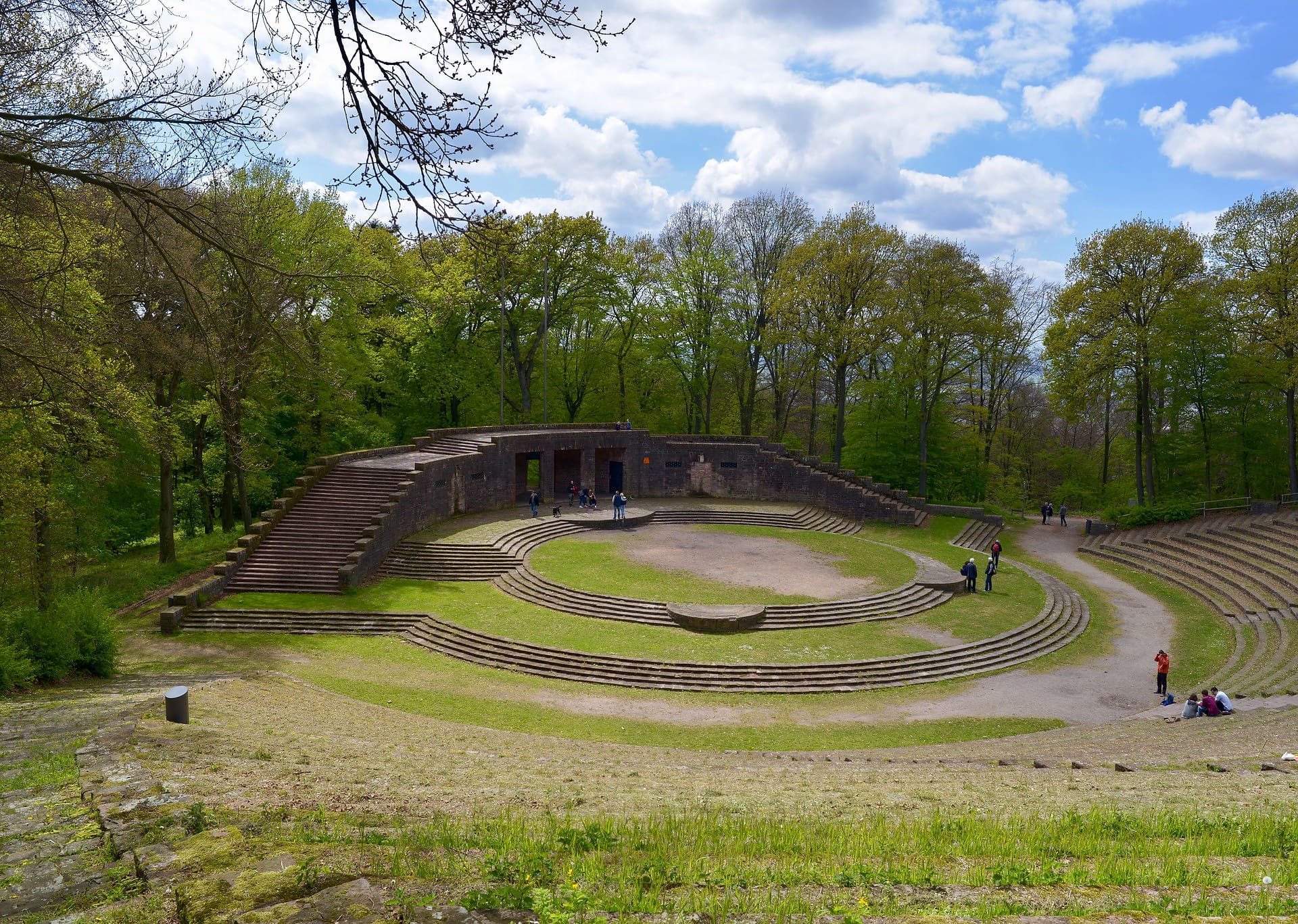
The Thingstätte - A Piece of the Past
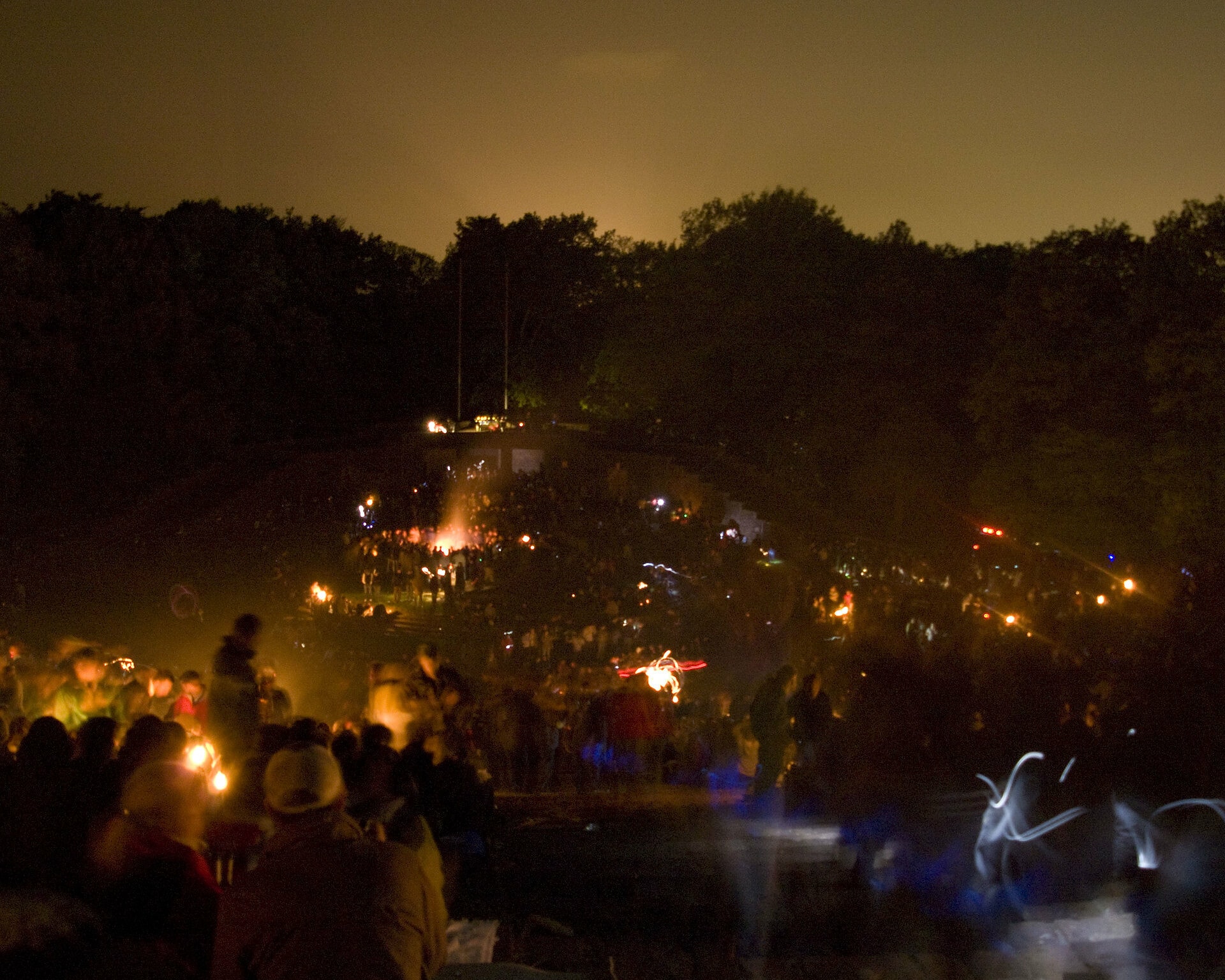
Meanwhile, the Thingstätte is known as a place of celebration rather than for its propaganda events. Until 2017, it attracted between 10,000 and 20,000 visitors annually to celebrate Walpurgis Night.
Titelbild: „Thingstätte Heidelberg“ von michaeltk ist lizenziert unter CC BY-SA 2.0.
History and background of the Thingstätte
The Thingstätte was established in 1935 as part of the NSDAP’s efforts to create a network of open-air stages throughout Germany. These stages, known as Thingstätten, were to be used for political rallies, cultural events and other forms of propaganda. Under the Minister of Propaganda, Joseph Goebbels, they were to support the new “Thing movement” (“Thing”: Germanic word for a people’s and court assembly) and help the regime create the new German man as defined by National Socialism. The Heidelberg Thingstätte was one of the first of its kind and was built by Hermann Alker on the Heiligenberg above the city.
The Heiligenberg Thingstätte was primarily used for political rallies and other Nazi-related events. However, it was also available for cultural events such as plays and concerts. At that time, attempts were made to turn Heidelberg into the new Salzburg of southwest Germany with the help of propaganda events. Under the name “Reichsfestspiele”, Heidelberg was supposed to flourish under the National Socialists.
Today, the Thingstätte in Heidelberg is still used for cultural events, but in a very different way than during the Third Reich. The theater is used for plays, concerts and other cultural events and is a popular venue for open-air performances. These events are intended to strengthen cultural diversity and the sense of community among the people of Heidelberg.
Meaning of the Thingstätte
The Thingstätte is of great importance for Heidelberg and all of Germany for several reasons. First, it is an important example of the methods of National Socialist propaganda. The open-air stage was intended to be a powerful symbol for the National Socialist party and its ideology. It was to serve as an instrument for spreading the National Socialist message to the public.
Second, the Thingstätte is an important piece of German history. Today, the theater is a reminder of how the Nazi regime used architecture and mass events for its propaganda. To this day, the Thingstätte remains an important place for remembering this history.
Third, the Thingstätte is an important cultural site. It is a unique open-air theater and a popular destination for tourists and history buffs. The Thingstätte is freely accessible to the public. As the Heidelberg Thingstätte is the only Thingstätte in the Heidelberg region, it is even more interesting.
Construction of the Thingstätte
Robert Wagner and the mayor at the time, Carl Neinhaus, were responsible for laying the foundation stone of the building on May 30, 1934. They wanted to build a site for the people and create a kind of cult place for the new generation of National Socialists. The Thingstätte was to be the counterpart to the cemetery of honor on the other side of the Neckar. Accordingly, the two buildings were to complement each other.
The construction of the Thingstätte was completed by the architect Hermann Alker, who was a member of the NSDAP, and on June 22, 1935, it came to the opening. The Thingstätte Heidelberg was opened by the Minister of Propaganda Joseph Goebbels personally. He called it a “true church of the Reich” and “National Socialism turned to stone”.
The open-air stage was built entirely of natural materials such as stone, wood and earth and was intended to blend seamlessly into the surrounding landscape. In its final form, the audience rows offered about 8,000 seats plus around 5,000 standing places. The Thingstätte features a stage building and 56 semicircular rows of seating.
One of the most striking features of the Heidelberg Thingstätte is its unique architecture. As mentioned earlier, the theater was designed to blend seamlessly into the surrounding landscape, and its natural materials give it a timeless appearance. As a result, many visitors often assume that it is a Roman structure. The use of natural materials was also meant to symbolize the Nazis’ belief in the importance of nature and natural order. The theater’s large stage and terraced seating areas were meant to create a sense of togetherness among the audience.
The Thingstätte today
After the end of the Second World War and thus the fall of National Socialism, the site was allowed to fall into serious disrepair. Partly the remains were used by the US community to hold Easter celebrations there. In addition, the Thingstätte was also used for concerts by famous artists such as Udo Jürgens. Also small private events take place again and again at the Thingstätte. The place is thus used by the people as it was intended for once, but without the National Socialist background.
Until 2017, the Thingstätte was every year in the night before the first of May a popular destination for many revelers. Grab some drinks and friends, and then climb the Heiligenberg and celebrate the so-called Walpurgisnacht in an exuberant way. The Heiligenberg celebration site usually had more than 10,000 visitors on Walpurgis Night. For many, the celebration in the dark on the first of May was firmly linked to the Thingstätte.
Unfortunately, however, there were also always unpleasant events, which is why the celebration site at Heiligenberg has been closed every year since 2018 over the night of the first of May. Injured students, dangerous situations, rescue operations and forest fires led to the fact that the Thingstätte remains closed until further notice every year on Walpurgis Night. Even though it was met with disapproval by many students and other partygoers, the city of Heidelberg felt compelled to take drastic measures after the incidents.
„Thingstätte 1. Mai 2009 - 01.05.2009 - Walpurgisnacht - Heidelberg“ von cOlz.de ist lizenziert unter CC BY 2.0.
How to get there?
The Thingstätte is only accessible by car or on foot. By car, the journey takes about 30 minutes from the city center, as you have to make a small detour via Ziegelhausen. On foot, the hike takes about 40-60 minutes depending on your pace. However, on Walpurgis Night, it can only be reached on foot, as the parking is closed.
The advantage of visiting on foot is that you walk along a beautiful trail in the woods and can visit some other sights along the way. You can walk a short stretch of the famous Philosopher’s Path, taking in views of the other side of the Neckar River and marveling at the Königstuhl and the majestic Heidelberg Castle. In addition, you can visit the nearby Michaelskloster or the Heidenloch.
So it is recommended to do the hike if you want to get more of Heidelberg’s nature and keep fit.
Summary
The Thingstätte Heidelberg is one of the special, historical places in the city of Heidelberg. Despite its controversial past, the Thingstätte remains an important and fascinating part of German history and is now a popular tourist destination. Despite decay, the site on the mountain was often used for a wide variety of events and, until a few years ago, was visited by thousands every year on Walpurgis Night.
The entire site of the open-air stage is beautiful and extremely natural. Not for nothing is the Thingstätte, the most famous landmark of the Heiligenberg. It is, for example, the perfect idea for a hike with picnic or a photo shoot.
When visiting the Heiligenberg, of course, the Thingstätte can not be missed. As already mentioned, you can combine the visit of the Thingstätte super with other attractions such as St Michael’s Monastery or the Heidenloch.
If you should get hungry on your hike is also no problem at all. Next to the Thingstätte is a restaurant called Waldschenke. This place is just the right idea for a classic German lunch, especially if you have climbed the entire Heiligenberg on foot.
Tours & Tickets
Tours & Tickets nearby
Guided tours and entry tickets around Thingstätte Heidelberg - book directly.
* Tours & tickets by GetYourGuide. If you book through the markers, we earn a commission at no extra cost to you.