
Sights
Sternwarte Heidelberg
Blood moon: If the sun, the earth and the moon are in one line, then there is a blood moon to see. Thereby the earth must be between the sun and the moon, so that the moon lies in the earth's shadow and shines reddish. For example, on 16.05.2022 there was a total lunar eclipse. It began at 03:32 o'clock (CEST) with the penumbral phase, the total phase lasted from 05:29 to 06:54 o'clock, and the partial eclipse ended at 07:55 o'clock. In Germany, however, the moon set during the eclipse.
- District
- Altstadt
- Getting there
- Open route
Table of contents
- What is there to see in the planetarium?
- Can I make a reservation for the Heidelberg Mountain Observatory on the Königstuhl (LSW)?
- Directions
- History of the Heidelberg Königstuhl Mountain Observatory
- Institution University of Heidelberg
- Are there discoveries that have been made by the Heidelberg Königstuhl State Observatory?
- Important persons
- What technology is used at the Heidelberg Königstuhl State Observatory on the Königstuhl?
- Why was the Heidelberg Königstuhl State Observatory built at the site?
- Are there any other organizations as well?
- Information about current space projects
- Further information
- Conclusion
What is there to see in the planetarium?
If the weather cooperates, then you can observe the moon in a new way. Evening observations start after dark. Before that, unfortunately, it is too bright.
Solar eclipse: There are three different types of solar eclipse. These are the partial, total and the annular solar eclipse. A solar eclipse can only take place at new moon, when the sun, the moon and the earth are in one line, with the moon between the sun and the earth. If the moon covers only part of the sun, it is a partial solar eclipse. If the moon covers the sun completely, then the scientists speak of a total solar eclipse. The third type is the annular solar eclipse. It is called this because the moon is far from the earth at this time, appears slightly smaller than the sun and leaves a bright ring of the sun uncovered.
Is it possible to reserve the Heidelberg Mountain Observatory on the Königstuhl (LSW)?
Currently, a reservation is the only way to visit the National Observatory (LSW). There is the possibility to book one or more guided tours directly at the observatory. Likewise, you can arrange various guided tours at the HDA. The Max Planck Institute for Astronomy, the State Observatory (LSW) and the House of Astronomy run a joint guided tour service. The guided tours are for groups of at least 12 and a maximum of 25 people and must be booked in advance.
Direction
The observatory on the Königstuhl is located at Königstuhl 12, 69117 Heidelberg, Baden-Württemberg. From Bismarckplatz, bus line 39 goes up to the Königstuhl; alternatively, you can take the mountain railway to the Königstuhl station.
History of the Heidelberg Königstuhl State Observatory
There were various locations to choose from. In the end, the Königstuhl was chosen because of its good location. The observatory stands at about 560 meters above sea level. The worsening observing conditions at the old observatory in Mannheim played a role. Today, parts of the historic photographic glass plate collection can be viewed online in the GAVO database (German Astrophysical Virtual Observatory). These contain various collections of photographs of different stars. The Landessternwarte Heidelberg Königstuhl is an institution that is bound together with the University of Heidelberg.
Are** there discoveries that have been made by the Heidelberg Königstuhl State Observatory?**
First Trojan Achilles
Near-Earth asteroid Alinda
248 minor planets
Over 800 asteroids
These images can be viewed in the GAVO database. This contains several collections.
Important people
Grand Duke Frederick I of Baden
He lived from 09. September. 1826 - September 28. 1907. During his life the Grand Duke financed, among other things, the observatory.
Maximilian Franz Joseph Cornelius Wolf
He was born on June 21. 1863 in Heidelberg and died on 03. October. 1932 also in Heidelberg. Wolf built a private observatory in his parents’ house. During this time also the idea grew to build a mountain observatory for larger observations. When the observatory was finally opened on June 20, 1898, he became director together with Wilhelm Valentiner. Wolf was the head of the astrophysical department. When Valentiner retired in 1909, his department, the astrometric one, was combined with Wolf’s under Wolf’s leadership. Before that, they competed with each other.
Maximilian Wolf worked in several areas. Among them was cataloging astronomical nebulae. Using astrophotography, the scientist was able to make visible nebulae that could not be seen with the eye, including dark nebulae. In 1909 he was the first to photograph Halley’s Comet on its return. To this we should add that the astronomer rediscovered the comet. The comet is named after Edmond Halley, who calculated its return in 1705.
William Valentiner
Valentiner was born on February 22, 1845 in the town of Eckernförde and died on April 1, 1931. In 1875 the astronomer got the post of director for the observatory in Mannheim. Then he also became the director in Karlsruhe, when the observatory was moved. When the observatory on the Königstuhl in Heidelberg was built, he became the head of the astrometric department.
Andreas Quirrenbach
He is a professor at Heidelberg University and his focus is astrophysics. In addition, he has been head of the observatory since 2006. Astrophysics also includes basic research. He was selected among all other candidates.
There were also private supporters, such as Catherine Wolfe Bruce.
What technology is used at the Heidelberg Königstuhl State Observatory on the Königstuhl?
Kann refractor
This is an 8-inch refracting telescope, one of the historic instruments of the observatory.
Bruce telescope
This is an astrograph. The Bruce Telescope was funded by donor Catherine Wolfe Bruce for the national observatory. It allowed Wolf and his staff to photograph objects.
Waltz Telescope
This reflecting telescope with a 72 cm mirror was the first large astronomical telescope by Carl Zeiss and went into operation in 1906. It is the only historic telescope on the Königstuhl that is still used for research.
Cassegrain telescope
In this reflecting telescope, the light from the primary mirror is reflected by a secondary mirror.
Schmidt telescope
This telescope is only for photography.
Zeiss telescope
This is a refracting telescope. 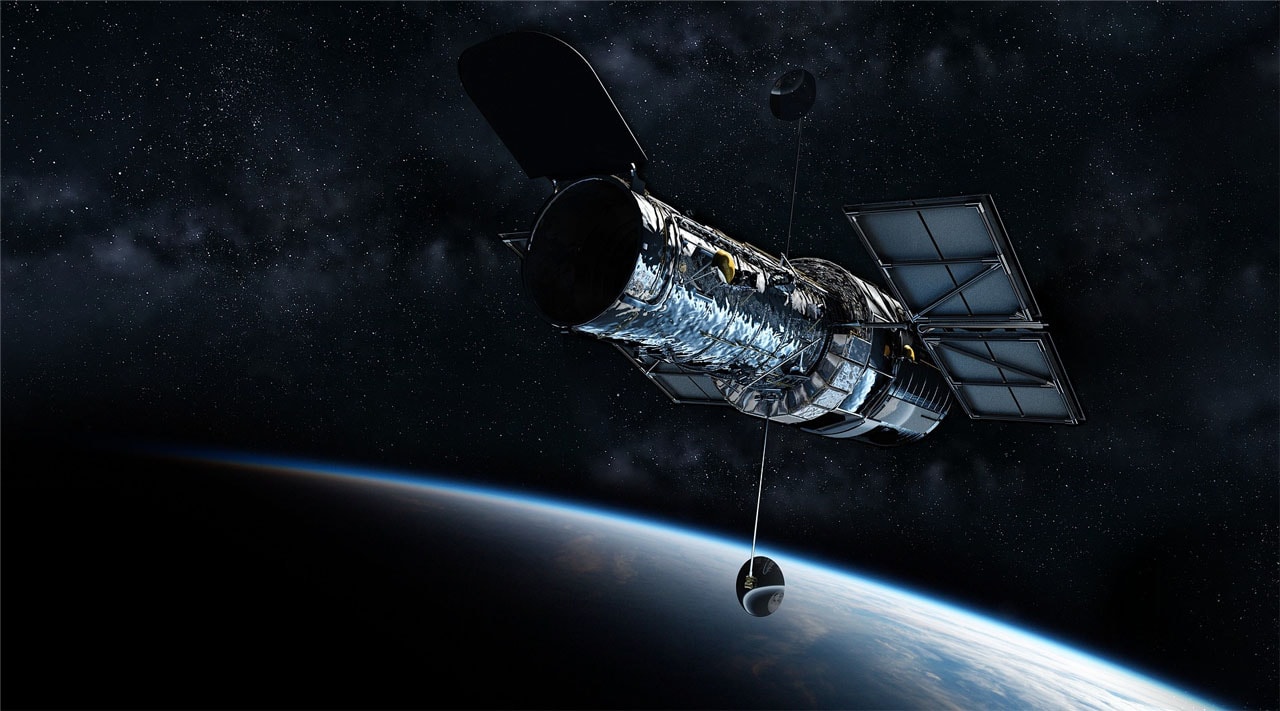
Why was the Heidelberg Königstuhl State Observatory built on the site?
Originally, the observatory was in Mannheim. Due to the increasing deterioration of visibility, it was moved to Karlsruhe. Subsequently, three locations were up for discussion. In the end, the parties agreed on the location on the Königstuhl. The Grand Duke Friedrich I of Baden financed the Heidelberg State Observatory.
Information about current space projects
James Webb Telescope
The James Webb machine is the most expensive observatory that has been put into space so far. It was named after James E. Webb, a former administrator of NASA. The larger goal is to explore the beginnings of the universe. It is supposed to be the successor of the Hubble. 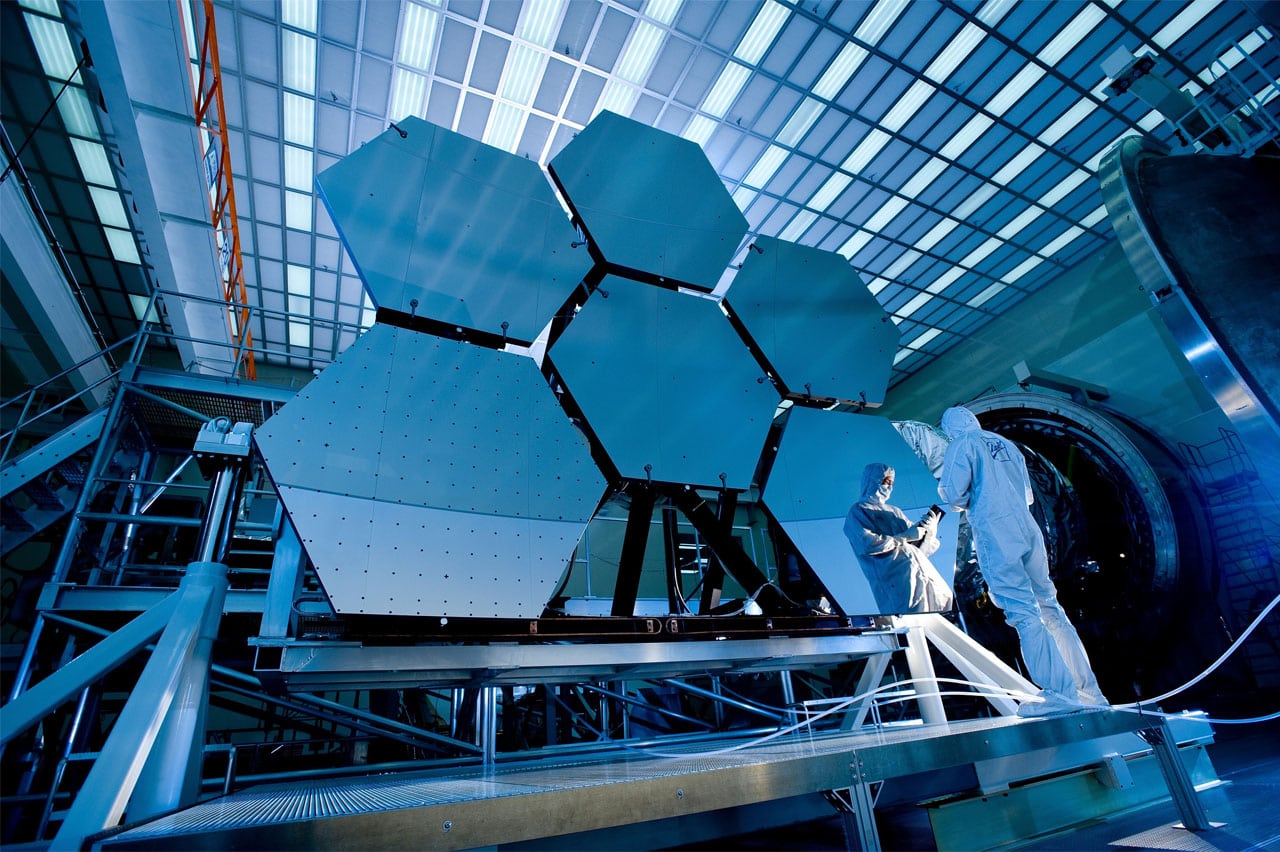 Gaia satellite
The mission was launched on December 19, 2013 and ended in 2025. The goal of the Gaia mission was to create an accurate three-dimensional map of our galaxy, the Milky Way.
Lunar-Gatway
Several space agencies planned a small space station in orbit around the Moon, in what is called cis-lunar space. This is the space between the Earth and the Moon. Unlike the ISS, the station was not meant to be inhabited all year round, but only during individual missions. In 2026, NASA announced that it would pause the Gateway as designed and focus on a base on the lunar surface instead.
Extremely Large Telescope, Giant Magellan Telescope, Thirty Meter Telescope.
The ELT in Chile is expected to see first light in 2029. The GMT, also in Chile, is planned for completion in the 2030s. The TMT, at 30 meters, was planned as the largest of its kind in the northern hemisphere, but its construction has been on hold for years and its future is uncertain.
Square Kilometer Array
Destinations: Cradle of Life, High Field Tests of General Relativity, Origin and Evolution of Cosmic Magnetic Fields, Galaxy Formation and Cosmology, Epoch of Reionization: This is the time when the first objects, like stars and galaxies, lit up and ionized the gas in the universe.
The SKA is being built in stages, with the low-frequency part in Australia and the mid-frequency part in South Africa.
LSST: Legacy Survey of Space and Time at the Vera C. Rubin Observatory (formerly Large Synoptic Survey Telescope).
Objectives: Survey gravitational lensing to find dark matter/energy, map small objects, observe stellar explosions such as novae.
**Euclid **
Euclid: This is to explore the dark universe.
Comet Interceptor mission
At the moment, the probe is still being built. According to the schedule, it is to be launched into space between 2028 and 2029. In space, the probe will be placed in a waiting position. When astronomers discover a suitable comet, ideally one entering the inner solar system for the first time, the probe will head for the object and study it.
Mars Sample Return
The goal was to bring samples from Mars back to Earth. Up to now, they have only ever been examined directly in the research laboratories of the robots, such as Curiosity. Therefore, only small amounts of samples could be examined. The goal was to examine the samples in laboratories on Earth. Because of rising costs, the joint NASA and ESA project was cancelled in 2026.
LISA
This can be used to study gravitational waves, for example. Gravitational waves were predicted by the famous Professor Einstein in 1916. With the help of the Advanced LIGO detectors, gravitational waves were detected for the first time on September 14, 2015. They are created, for example, when two black holes merge and distort spacetime. The measurement proved that gravitational waves really exist.
Information about current space projects
For further information you can contact the Landessternwarte Heidelberg Königstuhl and the HDA, or the different institutes in the respective main building. 
Conclusion
If you are interested in astronomy, then the guided tours at the Heidelberg Königstuhl State Observatory and the House of Astronomy are a great opportunity. In addition, it is wonderful when there are special events, such as a lunar eclipse.
Tours & Tickets
Tours & Tickets nearby
Guided tours and entry tickets around Sternwarte Heidelberg - book directly.
* Tours & tickets by GetYourGuide. If you book through the markers, we earn a commission at no extra cost to you.